




1xBet processes account information required to provide betting and casino services. This includes registration details, payment records, verification files, and technical data. Users in Pakistan and Bangladesh may provide information during registration, payments, withdrawals, or identity checks. Data may also arise from account activity, login sessions, and customer support contacts.
The privacy policy explains how this information is collected, stored, and used. Processing supports account administration, payments, security checks, fraud detection, and legal obligations. Verification requirements can differ between users and transactions. Financial references for Pakistani users appear in PKR. Equivalent references for Bangladeshi users appear in BDT.

What Personal Data is Collected
1xBet may collect several categories of personal data during normal account use. Registration creates the initial account record. KYC checks may add identity documents and proof of residence. Deposits and withdrawals generate transaction information. Technical records arise when users access the website or supported applications.
The collected information serves defined account, security, payment, and compliance purposes. Data requirements can increase when a withdrawal or security review requires additional verification. Pakistani financial references use PKR, while Bangladeshi references use BDT.
The main categories cover registration information, verification files, payment records, and technical account data.
Registration and Account Details
Account registration data identifies the user and creates the information needed for account administration. 1xBet may request several details when a new betting account is opened.
- Full legal name
- Date of birth
- Email address
- Mobile phone number
- Residential address
- Country of residence
- Preferred account currency, including PKR or BDT where available
- Username or account identifier
- Password or other login credentials
Names and birth dates help associate the profile with one identifiable account holder. Contact details support verification messages, security notices, and service communication. Address information can assist later identity or residence checks.
Login credentials permit authenticated account access. Currency settings determine how balances and transaction values appear inside the account. Registration information may later be compared with submitted KYC documents.
The requested account information should relate directly to account creation, administration, security, or applicable verification duties.
KYC Documents and Verification Data
KYC verification documents may be requested when 1xBet needs additional identity confirmation. The exact request can depend on account activity, payment history, withdrawal checks, or compliance requirements.
Common document categories include:
- Passport, national identity card, or driving licence for identity confirmation
- Utility bill, bank statement, or accepted document for proof of address
- Selfie or live verification image for comparison with identification
- Payment ownership evidence when a transaction method requires confirmation
- Source-of-funds records where financial checks require additional information
- Source-of-wealth evidence in cases requiring broader financial verification
An identity check can confirm that the account belongs to the person using it. Proof of address can establish residence and compare submitted details with registration records. A selfie or live image can help detect the use of another person’s documents.
Financial evidence may be requested during AML reviews or unusual transaction assessments. Any monetary figures connected with regional accounts should appear in PKR or BDT.
KYC information should remain restricted to verification, security, compliance, and related account administration purposes.
Technical Information: IP, Device and Cookies
Technical personal data is generated when a user visits or signs into the service. These records help identify sessions, diagnose access problems, examine suspicious activity, and administer account security.
Technical records can include:
- IP address
- Device type
- Device identifiers
- Browser type
- Operating system
- Approximate location derived from network information
- Login date and time
- Session records
- Visited pages
- Language settings
- Cookies and comparable browser technologies
IP address logging helps identify login origin and abnormal access patterns. Device data can distinguish recognised sessions from unusual sign-ins. Browser and operating-system information can support compatibility checks and technical troubleshooting.
Cookies can maintain authenticated sessions and store permitted account preferences. Security cookies may also support fraud checks and session control.
Technical data collection should remain tied to operational, security, compliance, and account-protection requirements.
How Your Data is Used
1xBet uses collected information to operate accounts and process requested services. Registration data supports account administration. Payment information supports deposits, withdrawals, balance records, and financial reconciliation.
KYC files and transaction history can support identity verification and AML checks. Technical records assist security controls and investigation of suspicious access. Processing may also be required for accounting, dispute handling, regulatory requests, or applicable legal duties.
For regional account activity, relevant transaction values can appear in PKR for Pakistan and BDT for Bangladesh.
Service Delivery and Transaction Processing
Registration, account, and financial records support routine betting and casino account functions. Payment data processing also creates a record of movements into and out of the account.
Typical processing includes:
- Confirming the account and authenticated user session.
- Recording stakes, settlements, and balance changes.
- Processing deposits submitted through available payment methods.
- Reviewing and processing withdrawal requests.
- Sending transaction or account notifications.
- Responding to account and payment support requests.
- Maintaining records required for financial reconciliation.
Deposit and withdrawal handling may involve payment information supplied by the account holder and transaction data returned by payment services.
Transaction records may remain stored where accounting, security, compliance, or dispute obligations require retention. Their use should remain connected to service delivery and accurate financial recordkeeping.
KYC, AML and Fraud Prevention
Identity and transaction information can be analysed during KYC verification and anti-money-laundering checks. The process may compare registration details, identification documents, payment records, device information, and account behaviour.
The main relationships are:
- Identity documents — confirm the account holder’s identity
- Address records — verify residence information
- Transaction history — identify irregular payment patterns
- Payment ownership data — check connections between users and payment methods
- IP and device data — flag abnormal login or transaction activity
- Account behaviour — identify patterns requiring further examination
The identity verification process can require additional documents when existing information does not resolve a security or compliance question.
Fraud prevention data can also help detect account takeover attempts, false identities, payment abuse, or other prohibited activity. These checks protect the individual account and other users in Pakistan and Bangladesh.
Platform Security and Compliance
Technical records and activity logs can support account protection and regulatory obligations. Login records help identify access attempts. Device information can flag unfamiliar sessions. Transaction and verification records can support legal or regulatory reviews.
Security and compliance purposes include:
- Detecting unauthorised account access
- Reviewing suspicious login patterns
- Investigating unusual payment activity
- Applying account and verification rules
- Maintaining audit records
- Responding to valid legal requests
- Preparing records required under applicable compliance duties
Processing for these purposes should remain limited to information relevant to the security or legal task involved.
Account protection relies on both system controls and accurate information supplied by the user.
Security Measures and Data Protection
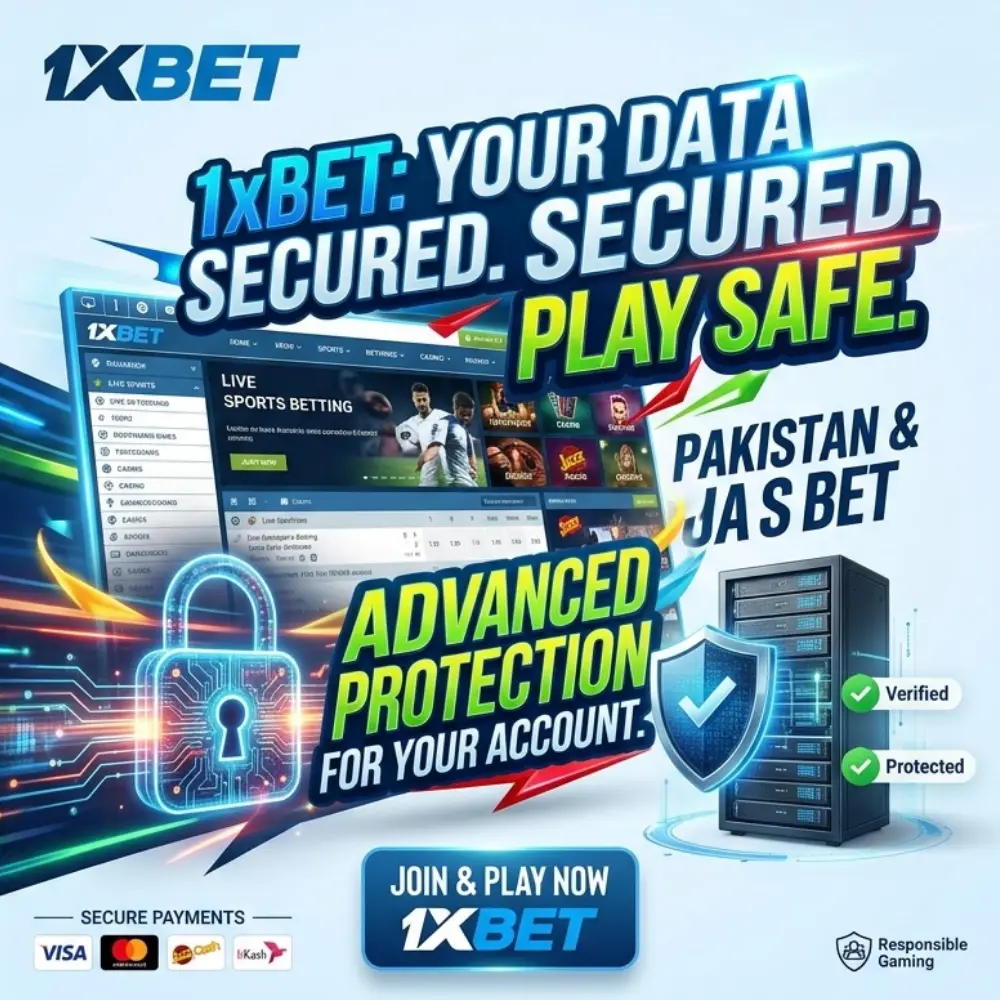
1xBet uses technical and organisational controls to protect personal, financial, and verification records. Protection focuses on reducing unauthorised access, data loss, misuse, and account compromise.
Security controls cover transmission, storage, access permissions, network protection, and activity monitoring. Sensitive account records require tighter access rules than ordinary public website content.
The following sections address stored information and network-level protection separately.
Encryption and Secure Storage
Sensitive information requires protection while transmitted and while retained in account systems. Encryption can reduce the usefulness of intercepted data, while restricted access limits who can reach stored records.
Key data protection practices include:
- Encrypted transmission of sensitive account information
- Protected storage for personal and financial records
- Restricted staff and system access
- Password-protected data systems
- Secure handling of KYC documents
- Controlled access to transaction records
- Protected treatment of login credentials
Passwords should not be stored as readable account text. Password hashing protects credentials by storing a derived value instead of the original password.
Secure storage of personal information is particularly important for identification documents and financial records. These files can contain enough information to create serious privacy risks after unauthorised disclosure.
Network and System Protection
Network security applies several defensive layers around account systems and stored user information. These measures can identify hostile traffic, unauthorised access attempts, or suspicious account behaviour.
Typical protective layers include:
- Network firewalls
- Access-control rules
- Security logging
- Suspicious-activity monitoring
- Intrusion detection
- Administrative access restrictions
- Security reviews
- System and software maintenance
Firewalls control network traffic according to defined rules. Access controls restrict sensitive functions to authorised accounts and personnel. Monitoring systems can detect unusual login attempts, abnormal requests, or other security signals.
Layered system protection reduces dependence on any single defensive measure. Regular monitoring also supports faster identification of activity requiring investigation.
Sharing of Data and User Rights
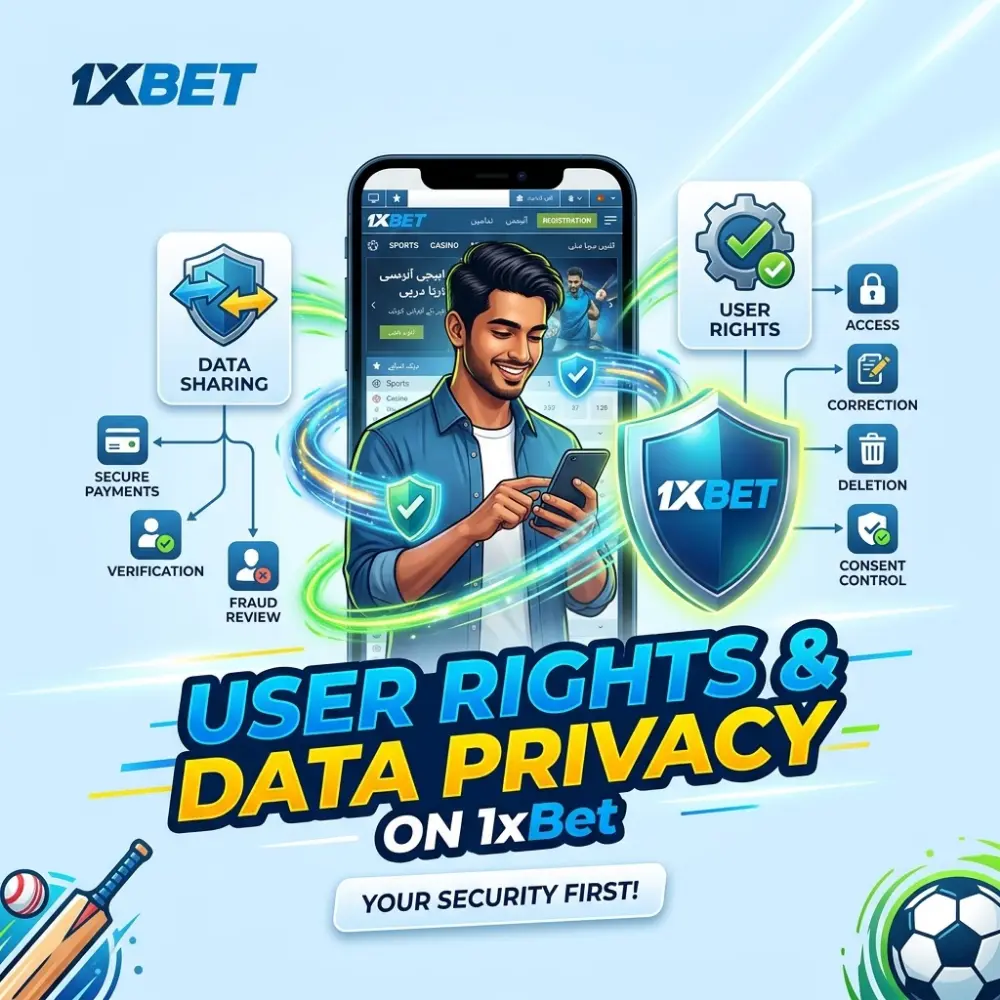
Personal information may sometimes need to pass beyond 1xBet’s internal systems. Such transfers can be required for payments, verification, hosting, fraud reviews, or legal compliance.
Users also retain privacy controls over information associated with their accounts. Depending on applicable law and the reason for processing, these controls may include access, correction, restriction, deletion, or consent withdrawal.
Some requests remain subject to legal retention duties, particularly those connected with financial and AML records.
When Data Can Be Shared With Third Parties
Third-party data sharing may occur when an outside organisation performs a required technical, financial, verification, or legal function.
Possible recipient categories include:
- Payment processors — deposit and withdrawal processing
- Banks or payment services — financial transaction administration
- Identity-verification providers — KYC document checks
- Hosting providers — technical infrastructure and data storage
- Security providers — fraud or suspicious-activity analysis
- Regulatory bodies — legally required reporting
- Law-enforcement bodies — valid investigations or lawful requests
A payment-provider disclosure should contain only information relevant to the requested financial service. Partner data transfers used for verification should remain connected to that verification task.
Service providers handling personal information should operate under contractual privacy and security duties. Disclosure should remain limited to the processing purpose and applicable legal requirements.
Personal information should not be treated as a general commodity for unrelated marketing transfers.
Your Rights Regarding Access and Deletion of Data
Users can request information about personal data connected with their accounts. Available rights depend on applicable privacy rules, contractual duties, and the lawful basis for retaining particular records.
Common privacy controls include:
- Request access to stored personal information.
- Ask for inaccurate account details to be corrected.
- Request deletion where no retention duty applies.
- Request processing restrictions where applicable.
- Withdraw consent for consent-based processing.
- Ask questions about how personal information is handled.
Requests can normally be submitted through official customer support channels. Some account information may also be editable through profile settings.
The right to erasure does not always require immediate deletion of every record. AML, accounting, security, dispute, or legal duties may require specific information to remain stored.
Users should identify the account concerned and describe the requested privacy action clearly. Additional identity confirmation may be required before sensitive information is released or changed.
Conclusion
The 1xBet privacy policy covers the main data involved in registration, verification, payments, security, and account administration. Pakistani and Bangladeshi users may provide identity, contact, financial, KYC, and technical information during normal service use.
This data supports account access, PKR or BDT transactions, fraud checks, AML procedures, and legal compliance. Security controls protect stored records and network activity. Limited third-party transfers may occur for payments, verification, infrastructure, or lawful requests. Users can also request access, correction, restriction, or deletion where applicable.